Routines
Hairstyles that survive a baby (and spare your hairline)
Any style you wear now gets stress-tested by a grabbing baby, a feed, a carrier strap and a nap you didn't plan — and it has to pass all that without punishing your hairline. Here's the catalogue, rated on the only two axes that matter this year: baby-proofness and tension.
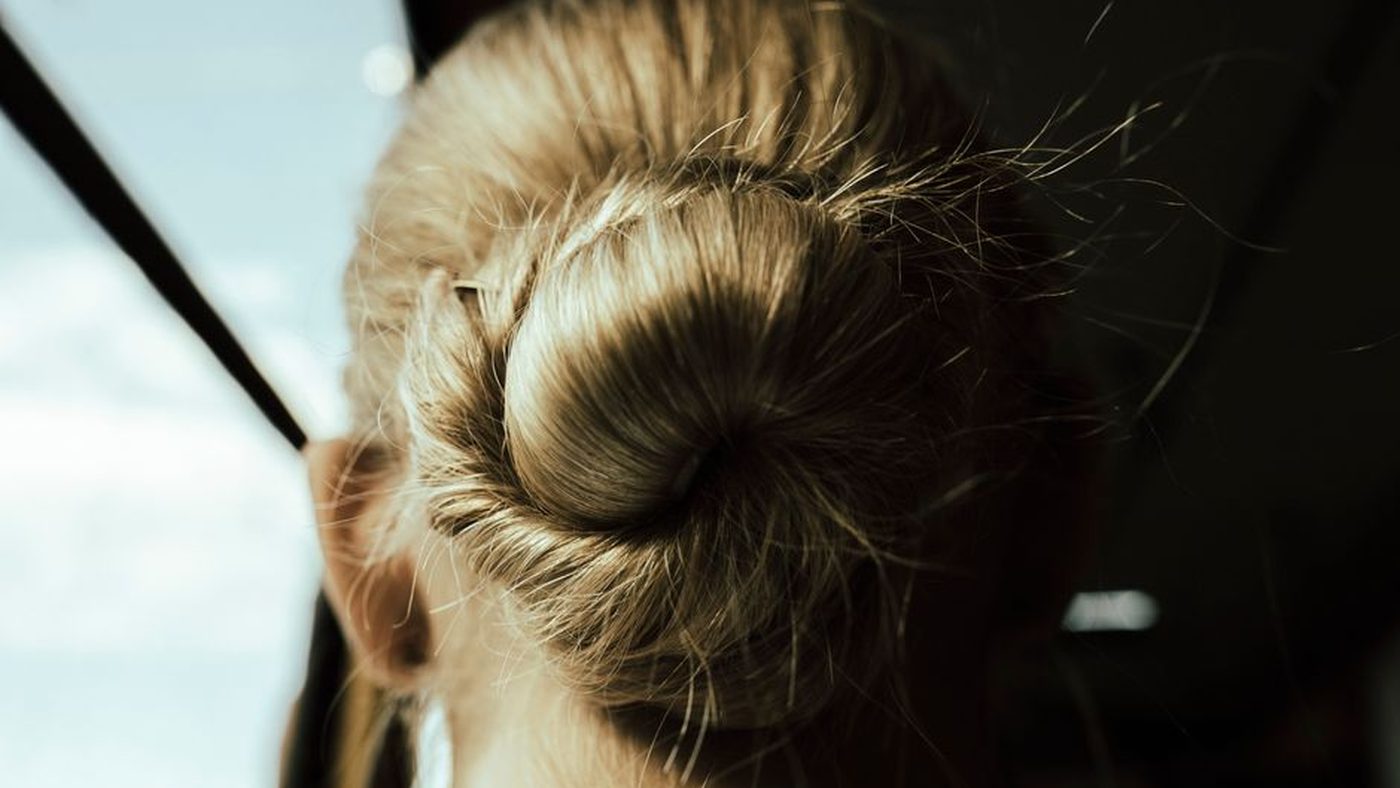
What makes a style baby-proof?
Three properties. Nothing dangling into grab range — a swinging ponytail is an invitation with a handle on it. Nothing structural — a style that collapses if one pin moves won't survive a carrier. One-handed rebuildability — because it will come down at some point, somewhere without a mirror. Baby-proof means cheap to lose and instant to restore, not indestructible.
Which styles hold without pulling?
The podium: the claw-clip French twist — full hold, wide tension spread, three seconds to rebuild, the era's uniform for good reason. The low loose bun with a soft scrunchie or spiral tie — comfortable under a carrier's head-strap zone and off the grab radar. The loose braid started behind the hairline — contains everything through a feed without recruiting the fragile margin hairs. All three pass the finger test: you can slide a finger under the style at the hairline without resistance. If you can't, it's pulling — why that matters so much this year.
How do I keep hair out of tiny fists during feeds?
Height and containment beat hope. Twist everything up before the feed starts — mid-feed is the worst moment to negotiate. For the dedicated grabber phase (roughly the middle of the first year), braids and twists beat buns, because a bun offers a single satisfying handle and a braid offers nothing to close a fist around. And the veteran move: offer the decoy — a teething necklace or muslin in reach — because a baby who's holding something is a baby not holding your temples.
What about the regrowth bits at the front?
Give them a job instead of a jail. Soft face-framing pieces left out make the halo look intended; a slightly deepened part stacks density where eyes land; a dab of smoothing product lays the fuzz in formation — the full playbook is in the two-lengths styling post. What doesn't work is scraping the front back hard: it puts maximum tension on the exact zone that's rebuilding, and showcases the sparse line while doing it.
Which styles should I retire until the shed ends?
The high tight pony (all four sins: tension, dangle, handle, thin elastic), anything slicked at the margin, tight braids from the hairline, and any style on soaking-wet hair — wet hair stretches and snaps under loads dry hair shrugs off. None of these caused the shed and none is forever; they're just the wrong tools for a year when the hairline is down on numbers and busy rebuilding. Concrete move today: pick tomorrow's style from the podium above and park the tight pony until the regrowth timeline says the margin's back on its feet.
Sources
- American Academy of Dermatology — Hair loss in new moms (avoiding tight styles; low-tension accessories): https://www.aad.org/public/diseases/hair-loss/insider/new-moms
- Sanford Health — Hair loss after pregnancy (scrunchies over elastic bands; gentle styling): https://news.sanfordhealth.org/womens/hair-loss-after-pregnancy/
This article is general information, not medical advice. Postpartum hair shedding is common and usually temporary, but everyone’s situation is different. Please speak with your GP, midwife or maternal child health nurse about your own health — especially if you’re pregnant or breastfeeding.