Scalp
Is my ponytail hurting my hairline?
Your hair has been up since roughly the birth — same style, same spot, every day, because a baby and loose hair don't mix. Now the hairline feels tender when you take it down, and you're wondering if the tie-it-back default has a cost. Honest answer: constant tension is a real mechanical stress, and this is the worst year to apply it.
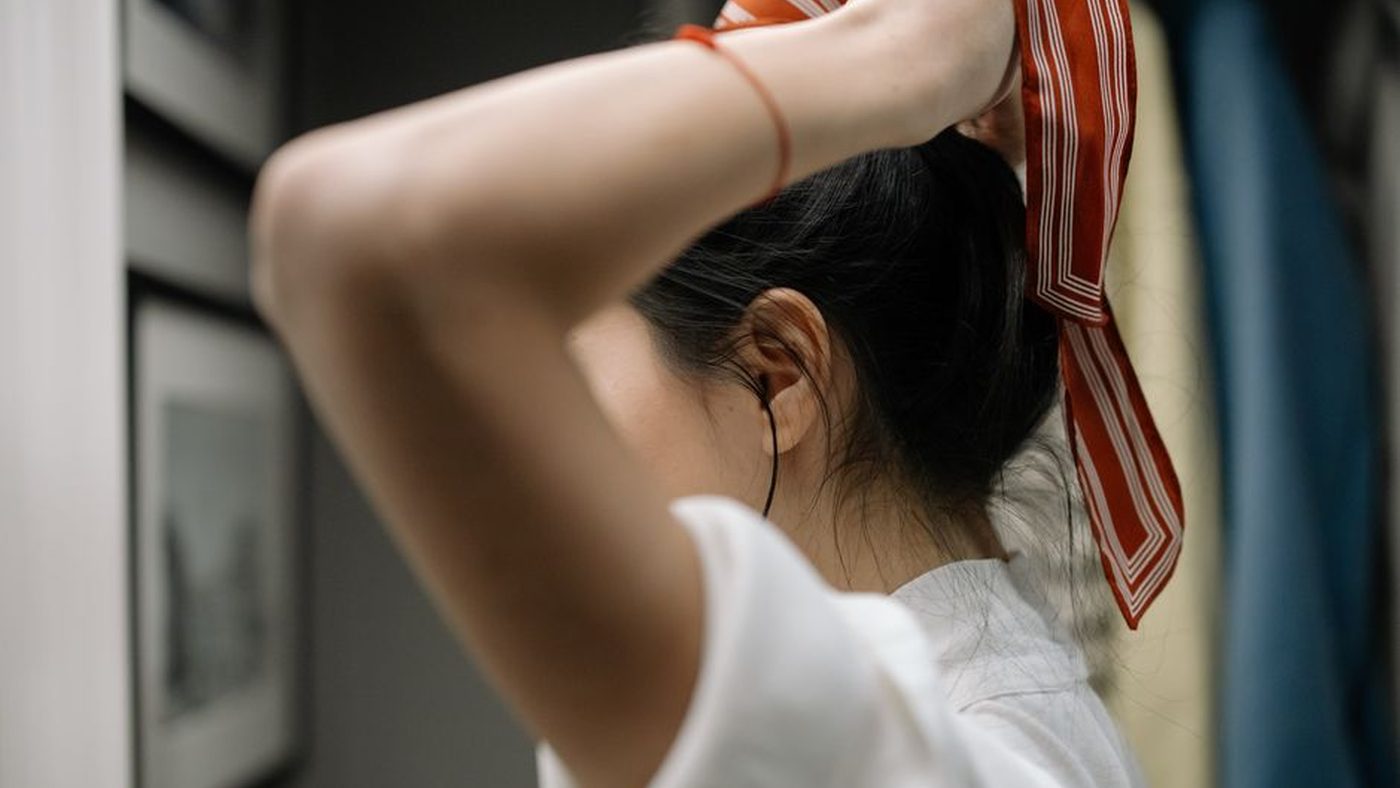
Can a hairstyle really affect my hairline?
Yes — chronic pulling is a recognised mechanical stress on hair, which is why health advice for the postpartum shed consistently includes avoiding tight styles and rough handling. To be equally clear about what a hairstyle didn't do: your shed is hormonal, and no ponytail caused it. Tension is a separate, additional load — one of the few in this whole story you fully control.
Why is the postpartum year the risky window?
Because everything at the margin is currently young. The hairline zone is down on numbers from the shed and filling with fine new regrowth — hairs that are shorter, finer and more easily snapped or tugged loose than mature ones. Apply daily tension to exactly that zone, in exactly this year, and you're stress-testing your most fragile asset. Tenderness when you take your hair down is the scalp reporting the load in plain language.
Which styles pull hardest?
Ranked roughly by tension: high, tight, thin elastics on wet hair (worst on every axis); slicked-back styles that recruit the margin hairs; tight braids at the hairline; the same style in the same position daily, which concentrates load on one line of follicles. Wet-hair versions of all of these pull harder still, because wet hair stretches before it snaps.
What are the low-tension alternatives that still get hair off a baby's face?
The claw clip is the era's champion: full hold, wide distribution, near-zero pull, one-handed. Low loose buns with soft scrunchies or spiral ties; braids started behind the hairline rather than at it; and the free upgrade — rotate positions daily so no follicle line carries the load twice running. Every one of these survives a feed and a grabbing phase; the baby-proof catalogue rates them all.
What's the one-week experiment?
Seven days: nothing tight, nothing thin-elastic, nothing slicked, position rotated daily. Cost: zero. At day seven, take your hair down and check the two gauges — does the scalp feel less tender, and is there less hair in the elastic? Most women feel the difference inside the week, and the ones who don't have still spent a week being kind to the zone doing the most rebuilding. Why the front matters so much right now is here.
Sources
- American Academy of Dermatology — Hair loss in new moms (avoiding tension and harsh styling during this phase): https://www.aad.org/public/diseases/hair-loss/insider/new-moms
- Sanford Health — Hair loss after pregnancy (gentle styling; scrunchies over tight bands): https://news.sanfordhealth.org/womens/hair-loss-after-pregnancy/
This article is general information, not medical advice. Postpartum hair shedding is common and usually temporary, but everyone’s situation is different. Please speak with your GP, midwife or maternal child health nurse about your own health — especially if you’re pregnant or breastfeeding.