Routines
The one-handed hair routine: hair care with a newborn on you
There is a baby on your left arm who objects to being put down, and everything you know about hair care assumes two hands and twenty minutes. This is the routine rebuilt for your actual life — one hand, interruptible everywhere, nothing precious.
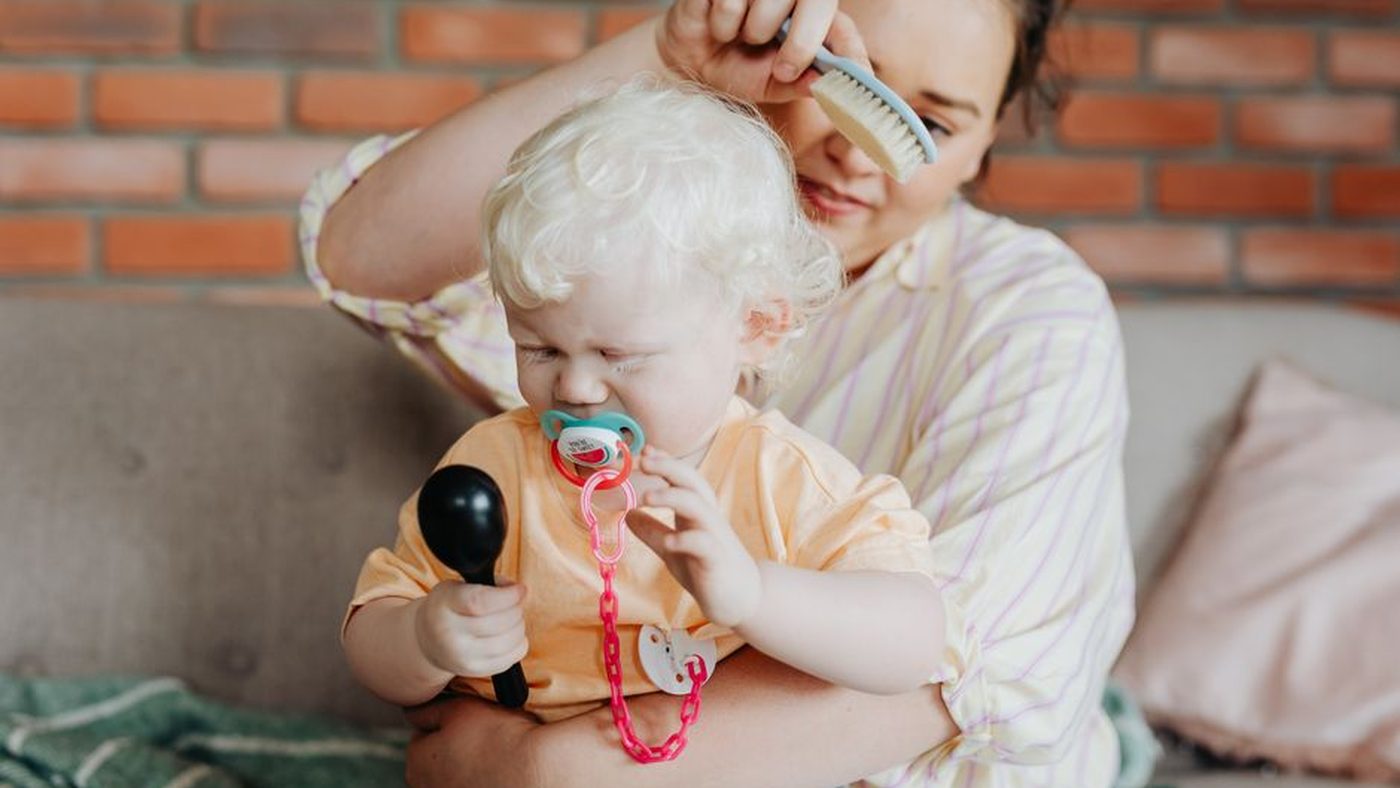
What does a realistic routine look like at week three?
Small and survivable: hair up in a soft claw twist most days, a genuine wash whenever the scalp demands it (the night sweats have opinions — the night-sweat wash system), a brush-out before that wash, and one thirty-second comfort step you can do while trapped under a sleeping human. That's the whole program. Anything more elaborate at week three is a routine designed for someone else's month.
What can I do while feeding?
The stationary jobs. Work a wide-tooth comb slowly through the ends on the free side; do a fingertip scalp massage for the comfort of it; apply a leave-in or a few serum drops along the part with one hand; rotate today's clip position so the tension never camps on one line (why that matters). Feeds are the one guaranteed sitting-still window of the day — the routine that survives is the one that moved in there.
What's droppable and what's worth protecting?
Droppable without consequence: blow-drying, styling for its own sake, any step requiring a mirror, matching anyone's ten-step anything. Worth protecting, in order: gentle detangling (it's what stands between the shed era and a breakage era — the detangling mechanics), the wash-when-grubby rule, low tension as the default, and the drain catcher. Protect those four and your hair exits the newborn months in genuinely good order, whatever it looked like day to day.
Which products fit one-handed life?
Anything operable by pump, dropper or open jar with one hand and no rinse. Leave-in spray conditioner over the rinse-out extras; a claw clip over anything requiring construction; and a dropper-format scalp serum earns its slot precisely here — a one-hand, no-rinse, thirty-second application, done at the part lines while the baby finishes a feed, for scalp comfort and smoother-looking new growth and nothing grander. Format is the feature at week three; anything needing both hands and a rinse has effectively left the roster.
What does the 60-second version look like?
The day is collapsing, so: brush through once from the ends up (fifteen seconds), soft claw twist positioned somewhere new (ten), serum or leave-in along the part with a ten-second massage (twenty), drain catcher glanced at, done (fifteen, generously). Sixty seconds, one hand throughout, and every protected priority touched. Tape the sequence inside the bathroom cabinet tonight — decision-free is the real luxury this year.
Sources
- American Academy of Dermatology — Hair loss in new moms (gentle handling and low-maintenance styling): https://www.aad.org/public/diseases/hair-loss/insider/new-moms
This article is general information, not medical advice. Postpartum hair shedding is common and usually temporary, but everyone’s situation is different. Please speak with your GP, midwife or maternal child health nurse about your own health — especially if you’re pregnant or breastfeeding.