Reading labels
Do I need different hair care postpartum, or just different habits?
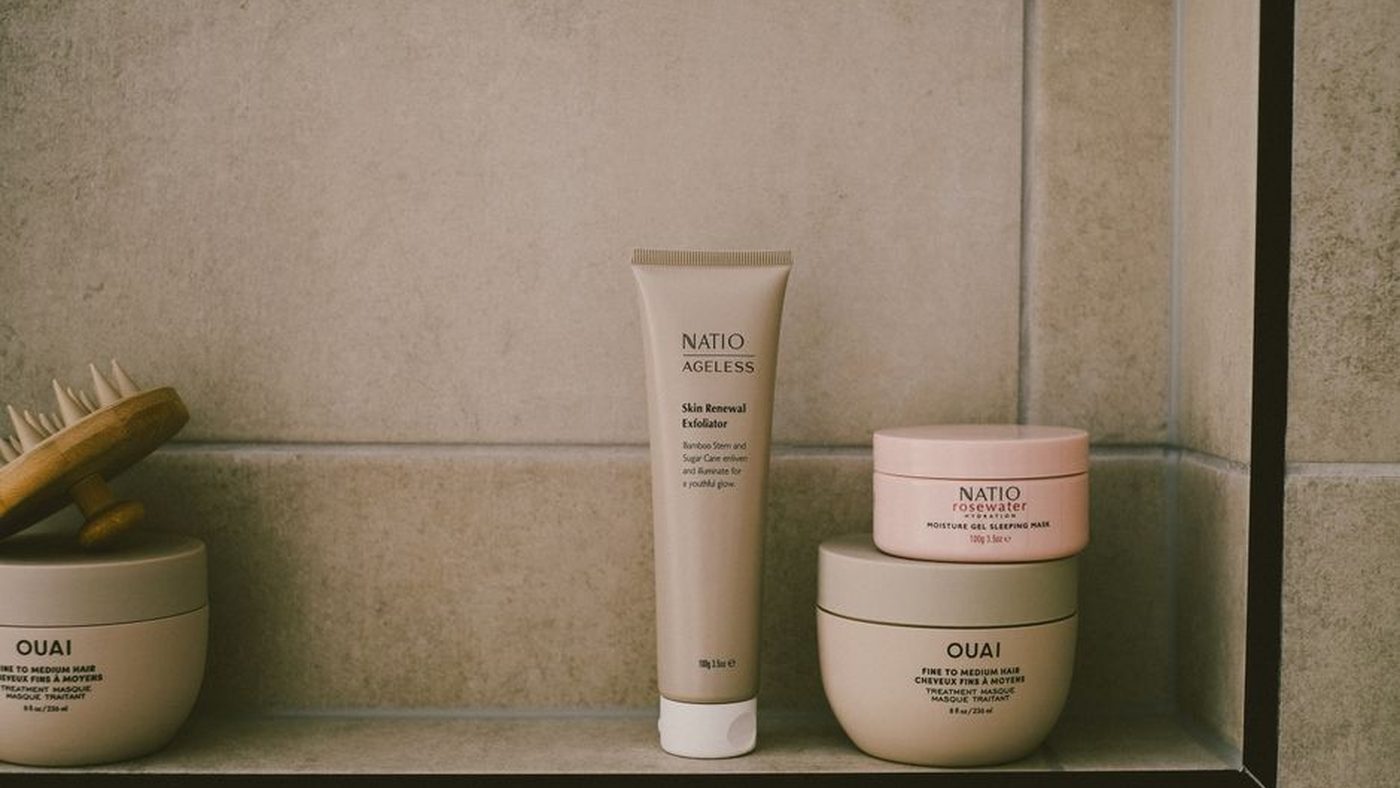
Your bathroom shelf was assembled by a person with different hair, different hormones and forty spare minutes. Before you replace any of it, it's worth asking the question the ads never will: is this a products problem or a habits problem?
What actually changed about my hair — and what didn't?
Changed: the shed (temporary, hormonal, when the shed stops), possibly your scalp's comfort and oil levels, possibly texture (why texture changes after a baby), definitely your available time, and — soon — a growing cohort of fine new hairs. Unchanged: the fundamental chemistry of washing and conditioning, and most of what your products were doing for you. The changes are real; they're just narrower than the marketing wants them to be.
When are new products the answer?
When a product was chosen for hair you no longer have, or a need you didn't have. The conditioner picked for thick pregnancy hair now flattening a finer situation; nothing on the shelf addressing a scalp that's newly itchy and tight; a texture shift your old stylers actively fight; heavy formulas your one-handed reality never gets through. Those are genuine product gaps — narrow, nameable, solvable one swap at a time.
When are habits the answer?
More often than the shelf thinks. Hair snapping in the brush is usually a detangling-mechanics problem (how to wash and brush during the shed) before it's a conditioner problem. A tender hairline is a tension problem (low-tension styling) no product touches. A grubby, itchy scalp is often wash-rhythm, water temperature and the eternal bun (why postpartum scalps itch) before it's a missing serum. Habits are free, testable in a week, and unglamorous — which is why nobody advertises them.
What's worth swapping first if I swap anything?
Whatever serves the need your audit actually surfaced, one product at a time. If flattened, finer hair is the finding: a lighter conditioner. If the finding is a scalp that's uncomfortable between the washes newborn life allows: a comfort-lane scalp step — but only if a comfortable scalp is genuinely your gap, and habits didn't close it first. One swap, one week, one verdict, then reassess. The shelf gets rebuilt by evidence, not by haul.
How do I trial something with zero spare time?
Change exactly one variable and let a week of ordinary life run the test. One new product, everything else constant, judged on the question it was bought to answer — softer? comfier? less snap in the brush? — with a note on your phone if the sleep deprivation is eating memory. It's the same one-variable method as the sensitivity test, and it's the only trial design that survives a newborn. Concrete step today: run the shelf audit — for each product, one question: was this chosen for the old hair? The first yes is your candidate.
Sources
- American Academy of Dermatology — Hair loss in new moms (adjusting products for finer postpartum hair): https://www.aad.org/public/diseases/hair-loss/insider/new-moms
This article is general information, not medical advice. Postpartum hair shedding is common and usually temporary, but everyone’s situation is different. Please speak with your GP, midwife or maternal child health nurse about your own health — especially if you’re pregnant or breastfeeding.